


- Big Tech search engines hide useful information beneath ads and AI slop, extracting our information for their profit and at a loss of our privacy
- We evaluate search engines on Experience Quality, Financial Transparency, Privacy Focus, Data Sovereignty and Environment Action
- In order to fundamentally change the math in a pro-consumer direction, several of our recommendations are funded directly by consumers (you pay for searches with money) instead of indirectly with data extraction and ad revenue to Big Tech companies
Big Tech Detox does not have any affiliate partnerships with the providers listed below.
What search helps us do
Search is one of the simplest ways in which we interact with our technology, and it often shapes how we engage with the world around us. When things work well, we are able to quickly locate and retrieve information from just about anywhere in the world in order to find the answer to a burning question, solve a difference of opinion with a friend, or even find somewhere to grab a good coffee and read a book.
Very broadly, all search engines work by crawling the web and indexing all of the information that they come across in a way that can be accessed by using keywords. If the web is a giant library, crawlers are agents that search all of its shelves (websites) for new books.
Indexing is done using keywords and metadata that is contained in those sites to speed up results. It's important to keep in mind that while every search engine does things their own way, they all work on these basic principles.
Where it went wrong
I was a Google fangirl for years. As an early tech adopter, I bought into the ecosystem of convenient and (ad supported) 'free' services, as well as Google's (now abandoned) motto and pledge 'Don't be evil'.
Unfortunately, over the past years the search engines we have relied on to find answers to our daily questions are increasingly taking data from our searches to serve us ads for things we don't need nor want, linking to low quality clickbait or serving us AI hallucinations as top results.
This has happened because Big Tech companies (to be clear we are referring to Google Search and Microsoft Bing search here primarily, though not exclusively) are required to grow revenue at all costs, which means they no longer prioritize usability or user satisfaction. Perversely, since these largest search engines profit most from the user data that they can access and sell, their position will likely continue to get worse before it gets better.
How search can be good again
We all deserve search that treats both us and our data privacy with respect, not as products to extract money from. Fortunately, such alternatives already exist, and moving to better services is not as difficult as it may sound. One of the hardest parts about switching is actually wading through all of the options available today and weighing the quality of each of them against your own personal values and preferences.
We are not here to dictate which service is best for you: that is for you to decide! We will show you some of our favorites, and why we think they are better alternatives to the Big Tech search engines which come pre-installed on your devices. We believe that as people become more informed about their options they are able to make better, more conscious decisions about them.
We will all benefit from the increased awareness, leading the innovation towards better options for search, allowing us to find joy again in using the search options that serves us best.
Selection criteria
Experience quality
How easy is it to get work done?
In search, this means results that are quick, efficient, and uncluttered (fewer ads and low quality results). The purpose of searching is to find answers or resources. Switching search engines feels like an upgrade when search results are higher quality and how they are presented is better than Big Tech platforms. We recognize that change can be challenging, so these new options must be worth the switch for you, the user.
Financial transparency
How does money flow through the system?
This means who pays for search queries and how: are users the customers or the product? How open is the company about this? It's important that the technology we rely on can be financed in a way that is sustainable and fair. Engineers and creators deserve to be compensated fairly for their work, and users deserve to be able to make informed choices about what products they use. We believe that non-profit and for benefit corporations can be important actors in providing fair treatment to both groups.
Privacy focus
How much data is being captured from users?
Keeping only a minimum of logging and telemetry data saved in the first place will reduce the amount of data to keep secure. When less user data is saved then there is less to secure from exposure. One important measure is adherence to privacy protections such as the GDPR an important piece of legislation from the EU regarding the transfer of personal information.
Data sovereignty
What protections exist for user data where the search provider is located, like their country and/or municipality?
Aka how easy can it be snooped by governments on or sold to shady data brokers. The service providers you use are greatly influenced by national and local governance. For example, the U.S. Government can request data on servers inside its borders for a variety of legal reasons, and in some cases even prohibit providers from telling you about it. This may be a good reason to use services that are located in countries or jurisdictions with stronger user data protections, such as the EU or Switzerland.
Environment action
How much does the search engine contribute to improve the environment?
Does the organization behind it have any environmental protection framework in place, and are they taking action on it. The largest companies are causing immense amounts of environmental harm in their quest for more data center space. We believe that technology companies can be pro-environment, and they should be.
These criteria all interact with each other dynamically, and individual priorities will be unique to each person. We will be showing you how 5 different search engines treat these criteria so you can easily make an informed decision on your next search engine.
Who pays for the searches?
What financial transparency really means
As mentioned above, much of the current problem of tech enshittification stems from companies with incentive structures that don't value user experiences. The old saying goes 'follow the money', and advertising revenue stands at the center of many of the biggest tech companies. As highlighted in the quote below, it is one of the major reasons why results from them continue degrade in quality even as their profits soar.
"Let's be crystal clear about what "free" really costs:
- Google generated $76 billion in US ad revenue (2023)
- They make $277 per user annually in the US
- That's $23 per month someone pays to influence your results
- Your attention is literally being auctioned to the highest bidder
Google is only "free" if your time has no value. Every ad, every clickbait result, every distraction steals minutes of your life you'll never get back."*
*Kagi 'why pay for search' https://help.kagi.com/kagi/why-kagi/why-pay-for-search.html
If an organization gets most of its funding in small money donations from lots of users like us it will be incentivized to serve our needs. On the other hand, large money injections from bigger organizations (corporations or billionaires) will generally exert influence and create an incentive structure that skews information and degrades the quality of results. Just because the user is not paying money directly to the search provider, does not mean that the results are really 'free'.
Our top 5 search engine picks
(In no particular order)
Metager
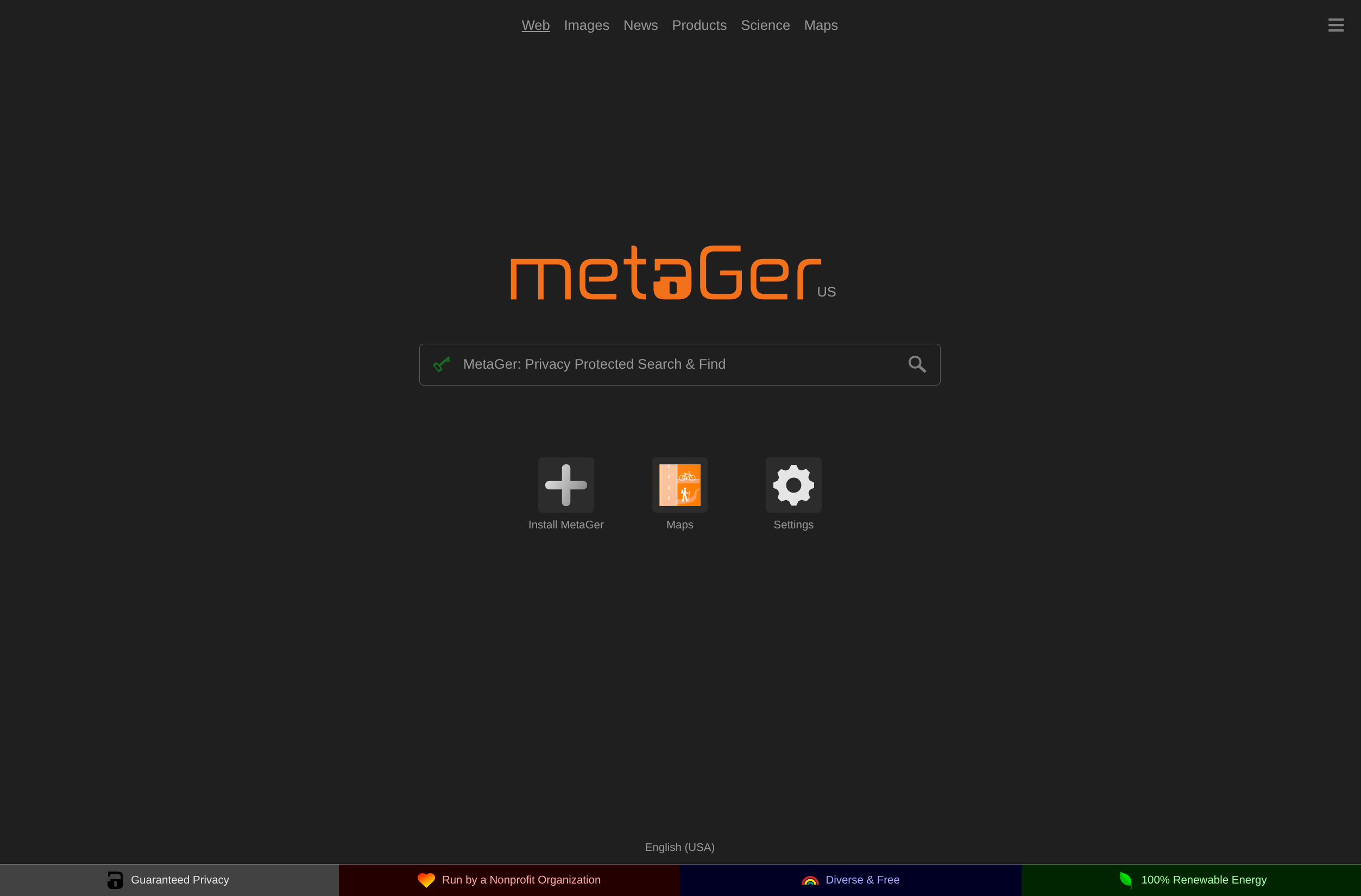
MetaGer is a non-profit organization that started in 1996 as a German language search platform and has significantly grown its index of English content in recent years. It relies on paid subscriptions from users in order to fund itself and keep growing. This means you will need to pay to use it, but it will be free of ads and other unwanted results. (Their payment model involves buying credits for searches, and you can set up as many devices as you like, the credits don't expire.) As an organisation that survived the dot-com crash and many tech cycles, their longevity speaks volumes for how users feel about MetaGer search. It has continued innovating and refining its process and remains relevant, providing great results while maintaining a strong focus on privacy and data sovereignty.
Kagi
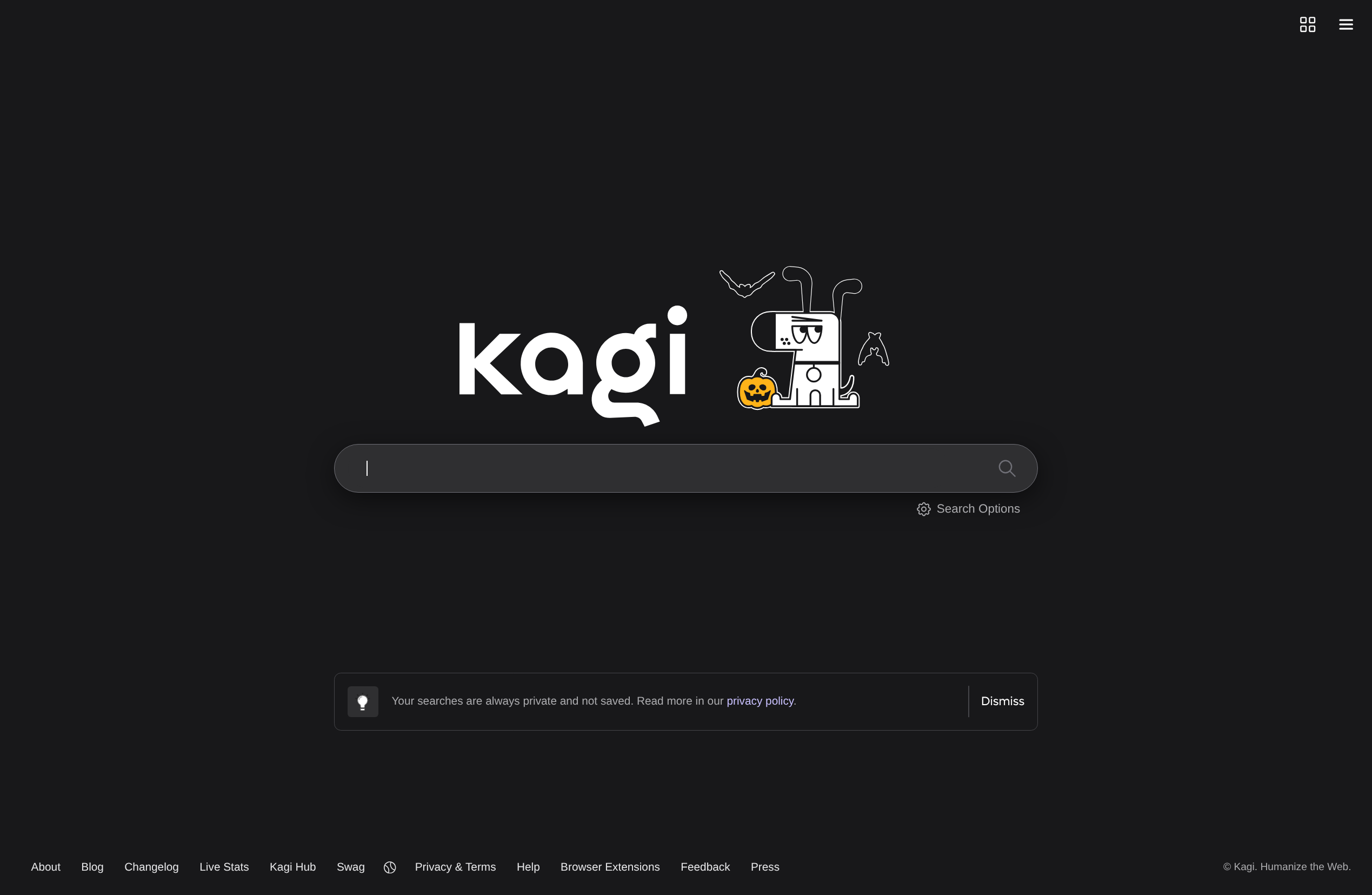
Kagi is also directly funded by its growing user base, having launched in 2022 and structured itself into a Public Benefit Corporation (PBC) in 2024. As a PBC Kagi is able to provide a commitment to users in more than just words on paper, but strongly integrated into their framework as a legal entity. As with Metager, searching with Kagi requires paying for the service, with the difference being a focus on a monthly payment model. Kagi offers a $5/month option which includes 300 searches or an unlimited option for $10/month. In my own personal use, I have found 300 to be plenty in order to get me through the month as my primary search tool, but I do some searching with other tools as well. There is a trial period for 100 searches, if you are curious to give it a try.
Brave
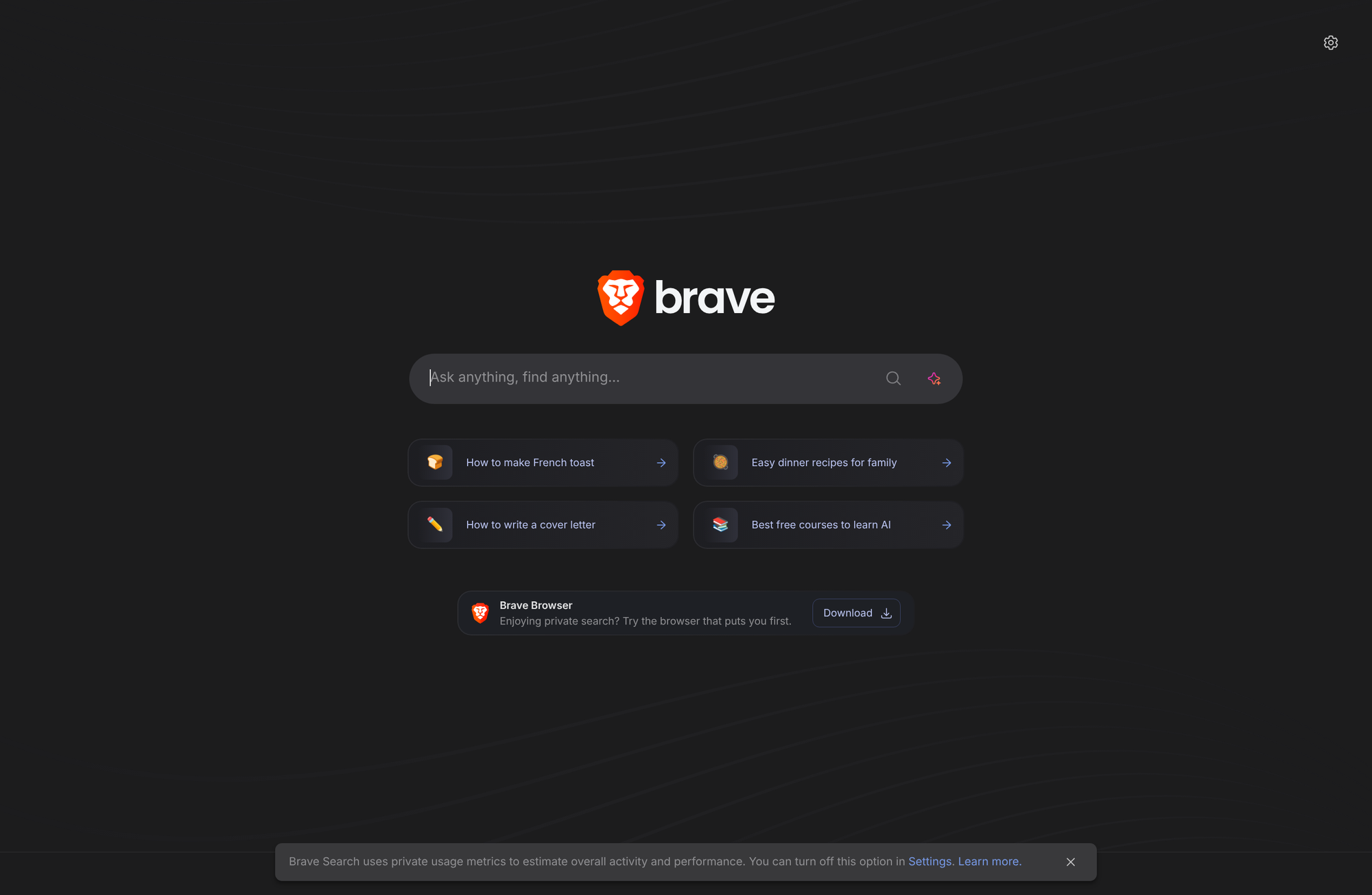
Brave has a search index as well as a browser and maintains a strong focus on user privacy while also providing a very polished experience. It is not neccessary to pay for using search on Brave, but upgrading is possible in order to support development and turn off ads. While Brave is an American company based in California, results are also available in 40 other languages in addition to English.
Startpage
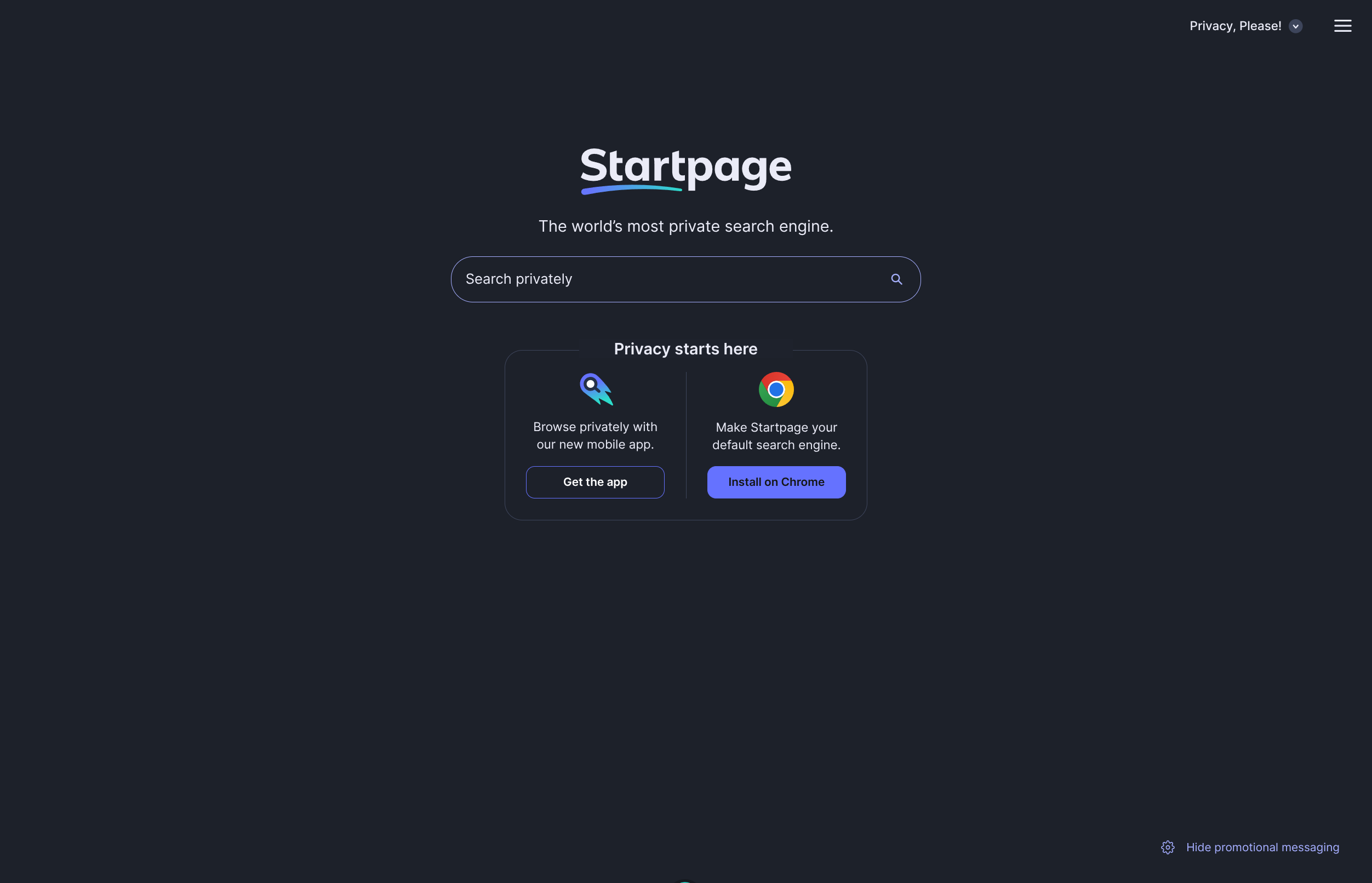
Another service worth mentioning because of their values and ease of use is Startpage, which is based in The Netherlands and has a strong privacy focus. In 2018 Startpage became part of the System1 publicly traded company, but maintains its own business unit within it and continues to be subject to EU GDPR and Dutch privacy laws. Startpage is supported by ad revenue, but allows for anonymous use, which can be simpler to set up if the main thing you are focused on is not giving data to Google or Microsoft.
Ecosia
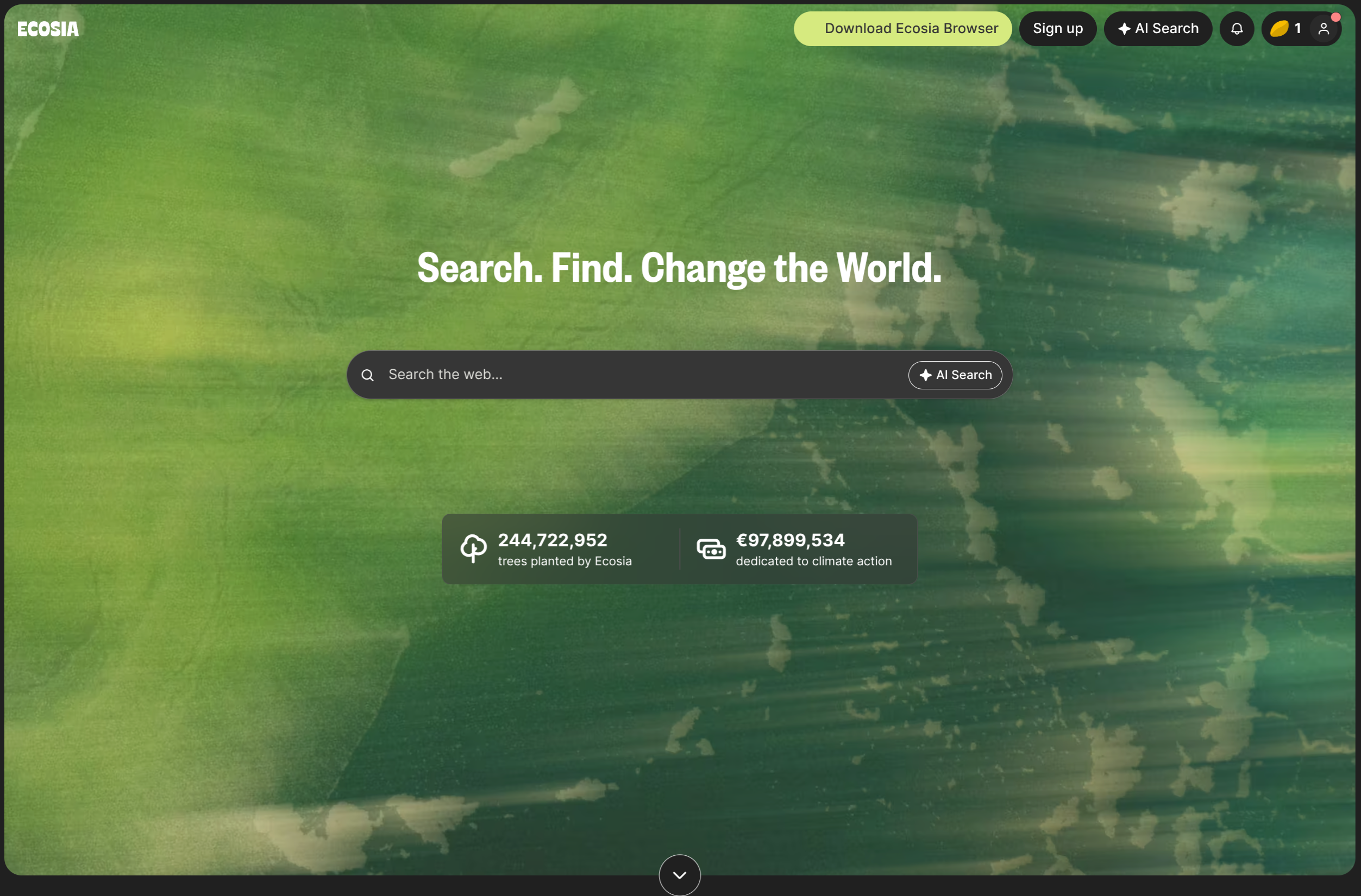
For those who prioritize an ecological focus, Ecosia provides a possible solution with a transparent financial model using profits from search to fund planting trees. Another of its strengths is their collaboration with Qwant to launch an EU based search index, seperate from Silicon Valley Big Tech, which is a huge step forward for digital sovereignty for all of us.
-Honourable mentions-
Mwmbl
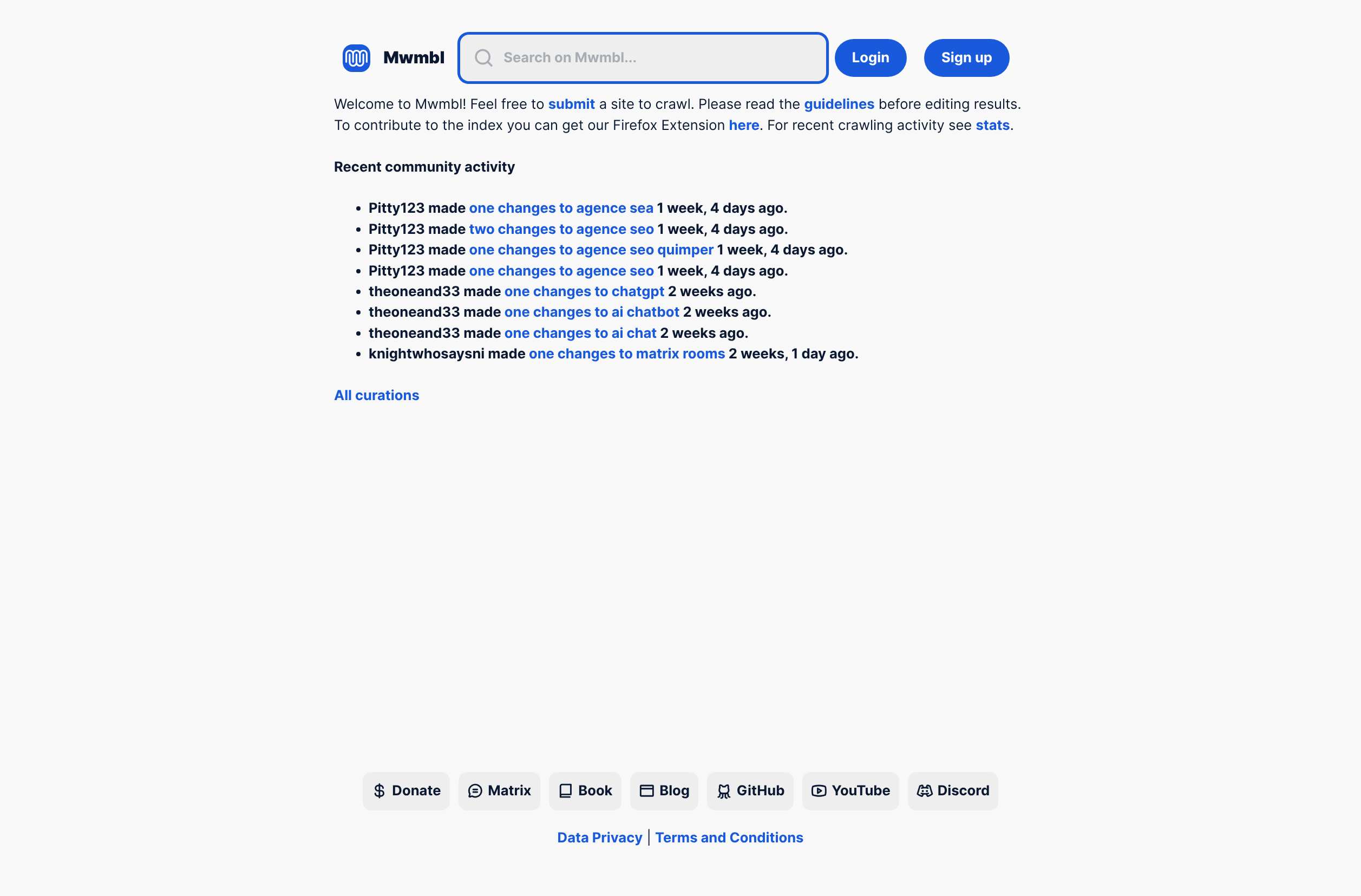
Mwmbl has only been around since 2022 but shows great potential. It is a free, Open Source and non-profit option relying on the strength of community support for funding, coding, and even crawling and ranking results! Time will tell if they are able to sustain operations with small donations and distributed commitments of time, skills, and processing power from the community, but the project is both ambitious and promising. We have played around with the results a bit, and while we don't think it is quite ready for use as a daily search tool, we do feel like it is a project to watch. Feel free to take a look and geek around!
Quick search engine comparison
| Experience Quality | Financial Transparency | Privacy Focus | Data Sovereignty | Environment Action | Average Score | |
|---|---|---|---|---|---|---|
| Metager |
|
|
|
|
|
3.8 |
| Kagi |
|
|
|
|
|
3.8 |
| Brave |
|
|
|
|
|
3.6 |
| Startpage |
|
|
|
|
|
3.5 |
| Ecosia |
|
|
|
|
| 3.8 |
|
As you can see they are all close contenders: Metager, Kagi and Ecosia with a 3.8 overall score, followed by Kagi at 3.6 and Startpage at 3.5. Depending on your own values and priorities, you can decide which combination of characteristics matter the most to you, whether it's Metager's focus on Financial Transparency and Privacy Focus, Kagi's leaning in on Experience Quality, or Ecosia's commitment to Environment Action.
We suggest you try a couple out and see what works best for you. We also suggest using more than one, depending on your situation a backup may provide better results for certain searches. Being aware of the options can greatly improve the overall quality of your experience.
The end? No, just the beginning
Before we conclude this chapter on search, it's important to address the elephant in the room, aka the fact that since the recent AI boom started 3 years ago, an increasing number of searches are now done through GAI chatbots, like Open AI's Chat GPT, Google's Gemini, Perplexity etc..
Some of us may even wonder if Search will be even relevant a couple years from now. We believe it will and here's how: a great search engine will incorporate AI in a way that truly serves users, providing different options of engagement, from a more conversational to a more concise input request.
However, we will also be addressing AI chatbots in depth in a future chapter, so stay tuned!
Glossary
Indexing - Broadly speaking, the process of making things on the web searchable for users.
Crawling - A process of methodically searching pages available on the web in order to index them for later retrieval. Web crawlers, also called spiders, can be used for activities such as SEO or, more controversially, for AI crawling.
Enshittification - The progressive decline in quality of software products over time, caused by companies' prioritization of profit over user experience. The term was coined by Canadian writer and activist Corey Doctorow as a critique of the current state of tech.
Open Source - Software which is licensed in a way that source code can be viewed, changed, and distributed freely to anyone for any purpose.
Telemetry Data - encompasses a range of data collection and analysis to understand user behavior, system performance, and identify areas for improvement. It can be used in ways that are beneficial or harmful to users.
GDPR - General Data Protection Regulation, high standard of digital privacy protections created for the EU and EEA.

Leave a comment